
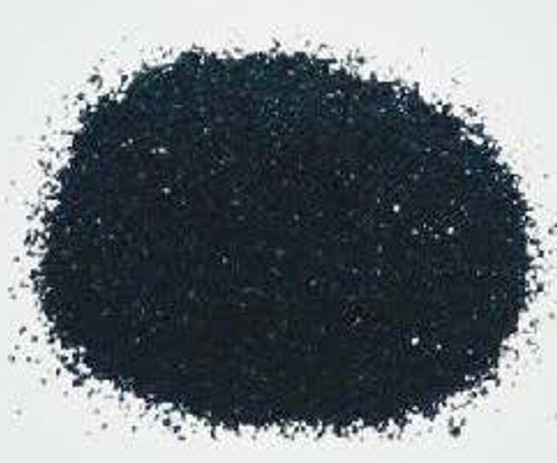
A widely used recarburizer (carbon raiser) refined from petroleum coke. Green coke is calcined to remove impurities, producing a high-carbon material for steelmaking, foundry and graphite-electrode production.
Petroleum coke is a widely used recarburizer and a by-product of crude-oil refining. Green (raw) petroleum coke has a high impurity content and cannot be used directly as a recarburizer — it must first be calcined to remove moisture and volatiles and raise its carbon content.
Petroleum coke is available in sponge, needle, shot (granular) and fluid varieties, each produced by a different coking route and suited to different end uses.
Four varieties by coking process and end use.
Higher sulfur and metal content; mainly used in the smelting industry as a recarburizer.
From high-aromatic, low-impurity feedstock; easily-fractured needle structure. After calcination, mainly used to make graphite electrodes.
Hard granular coke from feedstock high in sulfur and asphaltene; mainly used as fuel.
Fine-grained coke from continuous fluidized-bed coking; non-directional structure, high sulfur, low volatiles.
Calcination drives off moisture and volatiles from green coke.
Raises fixed-carbon content for use as a recarburizer.
Improves structure for electrode-grade material.
Calcined coke can be used directly as a carbon raiser.
Carbon raiser for steelmaking and foundry smelting.
Calcined needle coke as electrode feedstock.
Shot and fluid coke used as industrial fuel.
Specify your grade: tell us the use (recarburizer / electrode / fuel), required fixed carbon, sulfur, particle size and quantity — we supply the matching calcined petroleum coke.
Send the intended use, fixed-carbon and sulfur spec, particle size and quantity — we reply with the right grade and pricing within one business day.