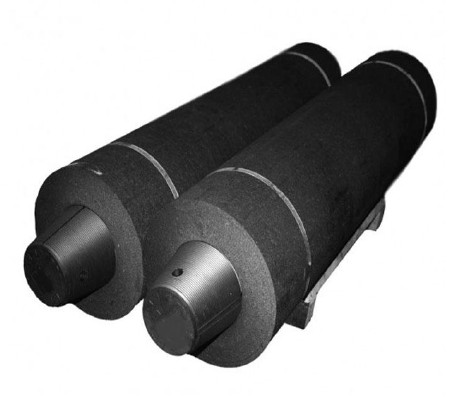
High-conductivity electrodes for electric-arc furnaces — made from petroleum and needle coke with coal-tar pitch binder, available in Regular Power, High Power and Ultra-High Power grades for steelmaking, silicon and yellow-phosphorus smelting.
Graphite electrodes are made mainly from petroleum coke and needle coke, with coal-tar pitch as the binder. They are produced through calcination, batching, kneading, molding, baking, graphitization and machining.
In an electric-arc furnace, the electrode is the conductor that releases electrical energy in the form of an electric arc to heat and melt the furnace charge. Based on their quality indices, electrodes are classified as Regular Power (RP), High Power (HP) and Ultra-High Power (UHP), and are mainly used in steelmaking, silicon smelting and yellow-phosphorus smelting.
Classified by quality index and current-carrying capacity.
Standard-power electrodes for conventional arc furnaces and ladle refining.
Higher current density for more demanding melting operations.
Highest current density for modern high-output EAF steelmaking.
From coke and pitch to a finished, machined electrode.
Petroleum and needle coke are calcined.
Raw materials are proportioned with coal-tar pitch binder.
Mixed and kneaded into a uniform paste.
Pressed / extruded into electrode form.
Roasted to carbonize the binder.
High-temperature graphitization.
Machined to size with threaded connections.
Electric-arc and ladle furnaces for steel production.
Industrial and ferro-silicon submerged-arc furnaces.
Yellow-phosphorus smelting furnaces.
Grade & size selection: the RP / HP / UHP grade, diameter, length and nipple connection are matched to your furnace power and current. Send your furnace details and quantity for the right electrode.
Send the grade, diameter, length and quantity, plus your furnace type — we reply with the right electrode and pricing within one business day.